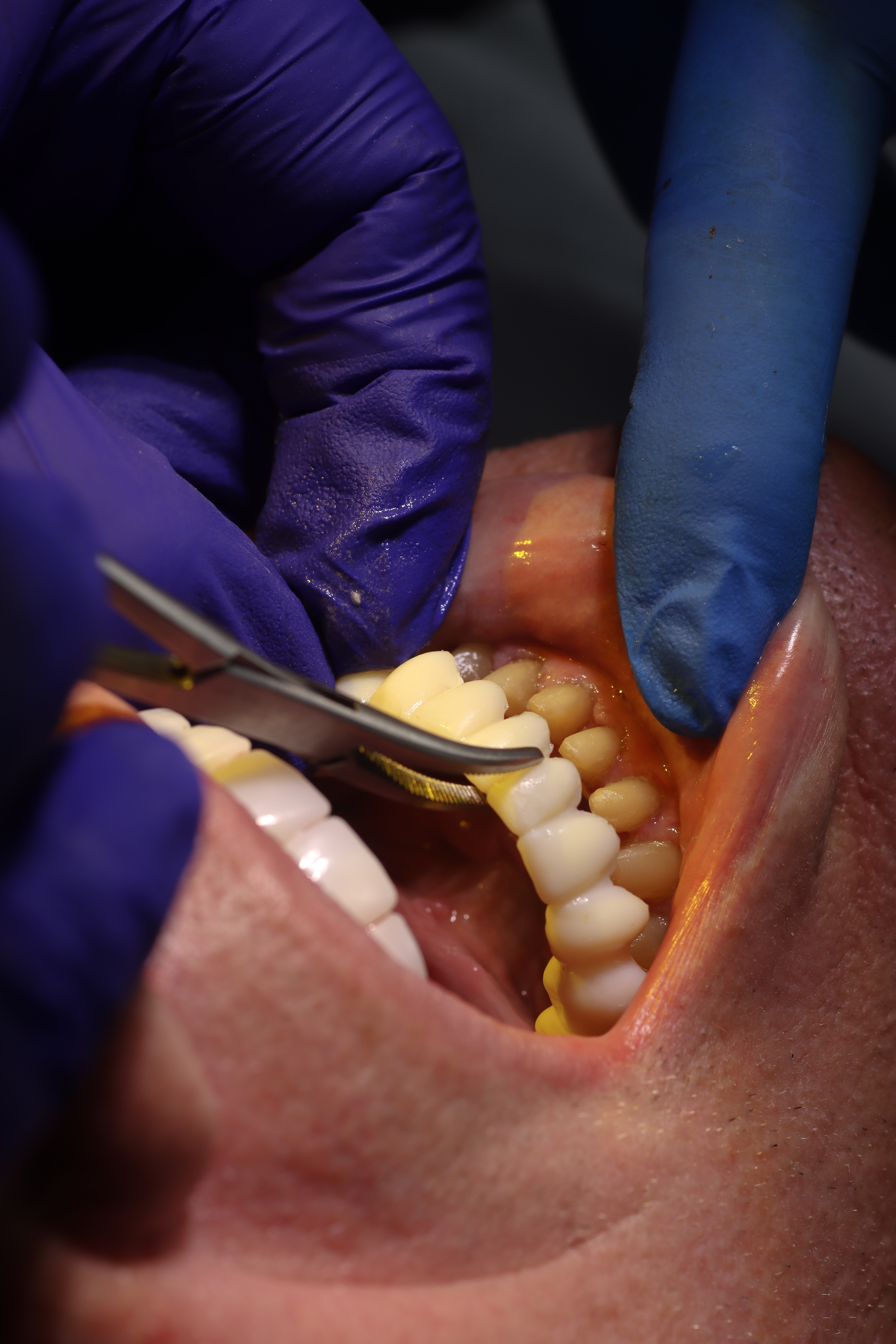
A dental implant is not just a procedure. It’s a medical device that will be in your body for the rest of your life. The decision about which one goes in — and from which manufacturer — deserves the same level of scrutiny you’d apply to any permanent medical implant. Most patients never think to ask.
If you’ve been researching dental implants, you’ve probably noticed something: the prices vary a lot. And not just from country to country. Even within the same city, quotes can differ by thousands of dollars for what seems like the same procedure.
One of the biggest reasons for that variation is something most patients don’t think to ask about: the brand and quality of the implant itself.
Not all dental implants are the same. The titanium post that gets placed in your jawbone — the part that will be there for the rest of your life — comes from manufacturers with very different levels of research, precision, surface technology, and long-term clinical data behind them. That difference matters more than most people realize.
This guide explains what implant brand and material quality actually mean, why they directly affect durability, healing, and long-term outcomes, and what to look for when evaluating a clinic. At ConfiDental, we use Straumann and Nobel Biocare — two of the most respected implant systems in the world — and we want you to understand exactly why that choice matters for your treatment.
| Quick Answer
Dental implant brands are not interchangeable. Premium systems like Straumann and Nobel Biocare are backed by decades of clinical research, advanced surface technology, and consistently high success rates. These factors directly affect how well the implant heals, integrates with your bone, and holds up over time. At ConfiDental in Costa Rica, both brands are used in treatment — giving patients access to world-class implant systems at a fraction of U.S. prices. |
Fast Table: Implant Brand Quality at a Glance
| Topic | Key Takeaway |
| Brand matters | The implant post is a permanent medical device — its manufacturer defines quality, safety, and longevity |
| Straumann | Swiss. SLActive® surface. 95–98% 10-year success rate. Used at ConfiDental. |
| Nobel Biocare | Swedish. TiUnite® surface. Pioneer of osseointegration and All-on-4 protocol. Used at ConfiDental. |
| Surface technology | SLActive and TiUnite are patented, clinically documented surfaces that accelerate and strengthen bone integration |
| Generic implants | Fewer clinical studies, less surface technology, variable manufacturing — higher long-term risk |
| What to ask | “What implant brand do you use?” Ask it before anything else. |
| Price vs. value | A premium implant placed correctly can last a lifetime. A cheaper one may cost far more to correct |
| At ConfiDental | Straumann and Nobel Biocare — world-class materials, Costa Rica prices |
| 🖼️ IMAGE PLACEHOLDER
Image 1: Premium Implant Components Suggested: Straumann packaging / Nobel Biocare implant box / close-up of implant components on sterile surface — conveys medical precision and brand credibility |
Who This Guide Is For
This guide is written for patients in the United States — and for those already living in Costa Rica — who are seriously considering dental implants and want to understand what separates a high-quality implant from a lower-quality one.
If you’ve received quotes from multiple clinics and noticed significant price differences, this guide will help you understand what’s behind those numbers. If you’re comparing Costa Rica to other dental tourism destinations like Mexico, understanding implant brand and quality is an important part of that comparison.
And if you’re the kind of patient who wants to understand what’s being placed in your body before agreeing to treatment — this guide is exactly for you.
Key Terms Worth Understanding
- Implant post: The titanium screw surgically placed into your jawbone. This is the foundation of the entire restoration. Its quality directly determines long-term stability.
- Abutment: The connector piece between the implant post and the visible crown or restoration. Also manufactured by implant companies — quality matters here too.
- Osseointegration: The biological process by which the implant fuses with your bone. Surface technology on the implant plays a key role in how well and how quickly this happens.
- Surface technology: The microscopic treatment applied to the implant surface to promote bone attachment. Straumann’s SLActive® and Nobel Biocare’s TiUnite® are two of the most clinically validated surface technologies in the world.
- Success rate: The percentage of implants that remain stable and functional over a given period. Premium brands consistently report 95–98% success rates at 10 years in independent peer-reviewed studies.
Why Implant Brand Directly Affects Your Results
When a clinic places a dental implant, they’re not just performing a surgical procedure — they’re installing a medical device that will be in your body indefinitely. The quality of that device affects healing, stability, durability, and what happens years from now.
Healing speed and bone integration
Not all implant surfaces are equal. Straumann’s SLActive® surface is engineered to create a chemically active, hydrophilic contact with bone that accelerates osseointegration. In many cases, this can reduce the healing window from the standard 6 to 8 weeks to as little as 3 to 4 weeks — with more reliable integration.
Nobel Biocare’s TiUnite® surface uses an anodization process that thickens the titanium oxide layer, creating a surface that promotes stronger, more consistent bone attachment. This is part of why Nobel Biocare implants are particularly well-suited for All-on-4 full-arch restorations, where long-term stability under full chewing load is non-negotiable.
Long-term durability and documented success rates
Premium brands like Straumann and Nobel Biocare have decades of clinical documentation behind them. Independent peer-reviewed studies consistently show 10-year success rates of 95–98% for both systems. That’s not marketing language — it’s the result of rigorous, long-term clinical trials and real-world data across millions of placements.
Generic or lower-tier implant brands may have less clinical data, less precise manufacturing tolerances, and limited long-term performance studies. For a medical device that’s meant to be permanent, that gap in documentation is a meaningful clinical difference.
Availability of replacement parts globally
Something most patients never consider: if your implant ever needs a component replaced years later — a new crown, a repaired abutment — your dentist needs compatible parts from that manufacturer. Straumann and Nobel Biocare are distributed in clinics in every major country. Any experienced implantologist in the United States, Europe, or elsewhere can work with these systems. With some generic brands, that continuity of care cannot be guaranteed.
Biocompatibility and manufacturing precision
Both brands use Grade 4 medical-grade titanium with tightly controlled manufacturing standards. Straumann also offers a ceramic (zirconia) implant option for patients who prefer a fully metal-free solution. These materials are engineered for biocompatibility and mechanical strength under the constant compressive and lateral forces of daily chewing over decades.
| 🖼️ IMAGE PLACEHOLDER
Image 2: Generic vs. Premium Implant Comparison Suggested: Side-by-side comparison graphic showing surface texture difference between a generic implant and SLActive® / TiUnite® surfaces — makes the abstract tangible |
Why Premium Implant Brands Cost More
There’s a reason Straumann and Nobel Biocare cost more than generic alternatives — and it’s not the packaging. Understanding that reason is what helps you evaluate whether the difference is worth it.
| Why Premium Brands Cost More | What It Means for Your Outcome |
| Decades of clinical studies | Long-term safety and effectiveness are documented across millions of placements — not assumed |
| Patented surface technology | SLActive® and TiUnite® required years of R&D investment. Generic brands copy the shape, not the science |
| Tighter manufacturing tolerances | Precision-milled components fit together with less micro-gap, reducing bacterial infiltration and component failure over time |
| Global parts and support systems | Replacement components available anywhere in the world, any time, for the life of your implant |
| Long-term component availability | Straumann and Nobel Biocare guarantee component availability for the life of the implant — not every brand does |
| Ongoing research investment | Both companies continue to fund new clinical studies, improving protocols based on real-world outcomes |
| Regulatory compliance | Both brands meet the highest international regulatory standards (FDA, CE, ISO) with full traceability of materials |
For a procedure designed to last a lifetime, this investment in research and manufacturing translates directly into a lower long-term risk for you. The question isn’t whether premium implants cost more upfront — they do. The question is what happens five, ten, or twenty years from now.
What Happens When Implant Quality Fails: Real-World Consequences
| Clinical Reality: The True Cost of a Failed Implant
When a low-quality implant fails — due to poor osseointegration, component fracture, or chronic peri-implant infection — the patient rarely just loses the implant. They often lose bone. The failed implant and subsequent inflammation accelerate the bone resorption that already led to tooth loss. By the time the failed implant is removed, the patient may have significantly less bone than before. That means: bone grafting is now required before any new implant can be placed. That’s an additional procedure, additional healing time (typically 4–6 months), additional cost — and an additional surgery on tissue that has already been compromised. The patient who tried to save money with a generic implant now faces a longer, more complex, and significantly more expensive treatment path than if they had chosen a premium system from the start. This is not a hypothetical. It is a documented pattern in implant dentistry. And it is one of the clearest arguments for choosing a premium, clinically validated brand the first time. |
| Want to know which implant system is right for your specific case?
Schedule a free call with ConfiDental’s patient coordinators. We’ll explain which system we’d recommend and why — before you commit to anything. |
Straumann vs. Nobel Biocare: A Side-by-Side Look
ConfiDental uses both Straumann and Nobel Biocare. Here’s an honest comparison — not to recommend one over the other, but to help you understand that both are premium-tier systems with complementary clinical strengths.
| Feature | Straumann | Nobel Biocare | Why It Matters |
| Founded | 1954, Switzerland | 1965, Sweden | Both have 60+ years of clinical research |
| Surface tech | SLActive® (hydrophilic) | TiUnite® (anodized) | Both outperform generic surfaces in osseointegration speed and reliability |
| 10-yr success | 95–98% | 95–98% | Among the highest documented rates in the industry |
| Best known for | Complex bone cases, faster healing | All-on-4, full-arch, aesthetic outcomes | Complementary strengths — different tools for different clinical needs |
| Material | Grade 4 Ti / Zirconia (PURE®) | Grade 4 Ti (TiUnite® surface) | Medical-grade, high biocompatibility, tightly controlled tolerances |
| Warranty | Lifetime on implant components | Lifetime on implant components | Both protect your long-term investment |
| Global parts | Available worldwide | Available worldwide | Any trained implantologist anywhere can work with these systems |
| Used at ConfiDental | ✓ Yes | ✓ Yes | Selection is made clinically based on each patient’s specific case |
The choice between Straumann and Nobel Biocare is a clinical decision based on bone density, the type of restoration planned, jaw anatomy, and treatment goals. Both are excellent. Either choice places you firmly in premium-tier territory.
| 🖼️ IMAGE PLACEHOLDER
Image 3: Dr. Garita Reviewing CBCT / 3D Imaging Suggested: Dr. José V. Garita Carrillo reviewing a cone beam CT scan at ConfiDental — demonstrates diagnostic precision and clinical authority |
What “Generic” or Lower-Tier Implants Actually Mean
When a clinic quotes a significantly lower price than others, it’s worth asking what’s behind that number. One common factor is the use of implant brands with less clinical documentation, lower manufacturing precision, or limited global distribution.
This doesn’t mean generic implants never work. For straightforward cases in patients with ideal bone density and no complicating factors, a lower-tier implant placed correctly by an experienced surgeon can perform well in the short term. But the risk profile over time is different — and the long-term data is far less robust.
Here’s what lower-tier implants can mean in practice:
- Less clinical documentation: fewer peer-reviewed studies on long-term outcomes
- Variable surface technology: may integrate more slowly or less predictably with bone
- Parts availability: replacement components may be difficult or impossible to source years later
- Manufacturing tolerances: lower precision can affect how well components fit together and how they perform under chewing load over time
- Limited warranty: coverage may be shorter or less comprehensive than premium brands
For a procedure designed to last a lifetime, the upfront savings on a lower-tier implant can become a significant long-term cost if complications arise.
| 🖼️ IMAGE PLACEHOLDER
Image 4: Before/After — Premium All-on-4 Case at ConfiDental Suggested: Clinical before/after showing full-arch transformation with All-on-4 using Straumann or Nobel Biocare — demonstrates real outcomes, not stock imagery |
| Received a quote that doesn’t mention the implant brand?
Ask directly: “What brand of implant do you use?” If the answer is vague or deflected, that tells you something important. |
What to Ask Before You Commit to Any Clinic
Whether you’re comparing clinics in the U.S. or evaluating implant dentists in Costa Rica, these are the questions that reveal what you’re actually getting for your money:
- “What implant brand do you use?” A reputable clinic should answer this immediately and specifically. Straumann, Nobel Biocare, Zimmer Biomet, and BioHorizons are all established brands. “We use high-quality implants” is not an answer.
- “What does the quoted price include?” Some clinics quote only the implant post and exclude the abutment, crown, imaging, and consultations. Ask for a complete, itemized quote.
- “Do you have before-and-after cases for my specific procedure?” Documented clinical results give you a realistic picture of what to expect from that team, with those materials.
- “What happens if I need follow-up care after I return home?” For international patients, continuity of care matters. A reputable clinic will have a protocol for this and will provide you with full treatment documentation.
- “What imaging is used for planning?” Cone beam CT (CBCT) scanning is the standard for safe implant placement. Ask if it’s included in the quote or priced separately.
- “What warranty covers the implant components?” Straumann and Nobel Biocare both offer lifetime warranties on the implant components themselves. Ask if your clinic can provide that documentation.
Straumann and Nobel Biocare in Costa Rica: What the Price Difference Really Means
In the United States, a single dental implant with Straumann or Nobel Biocare typically ranges from $3,000 to $6,000 per tooth, including the post, abutment, and crown. A full-arch All-on-4 restoration with the same premium systems can run $20,000 to $30,000 or more per arch.
At ConfiDental in Costa Rica, patients access the same Straumann and Nobel Biocare implant systems at significantly lower total cost. The difference isn’t in the quality of the materials. It’s in the cost structure of the healthcare system: lower overhead, lower labor costs, and no insurance middlemen in the direct-pay relationship.
What you’re not giving up when you choose ConfiDental:
- The implant brand — same Straumann and Nobel Biocare components used in top U.S. clinics
- The surface technology and decades of clinical documentation behind each system
- The precision of the surgical and restorative work
- Global parts availability for any future follow-up, anywhere in the world
- The aftercare coordination and follow-up support
What’s genuinely different:
- The total cost — significantly lower without compromising the materials or the clinical approach
- The experience: direct, personalized attention in a premium private clinic designed for international patients
- The coordination process: planned, guided, and communicated clearly before you travel
How ConfiDental Approaches Implant Selection
At ConfiDental, implant selection is a clinical decision, not a default. The choice between Straumann and Nobel Biocare — or specific systems within each brand — is made based on each patient’s clinical picture: bone density, jaw anatomy, the type of restoration planned, and the goals of the treatment.
This is part of what guided planning means. Before any implant is placed, a thorough diagnostic process takes place — including updated imaging when clinically indicated — so that the treatment plan is based on your actual anatomy, not a generic protocol.
Patients are informed about what system will be used and why. Transparency about materials is not an afterthought at ConfiDental — it’s part of how trust is built before treatment begins.
| 🖼️ IMAGE PLACEHOLDER
Image 5: ConfiDental — Treatment Planning or Consultation Scene Suggested: Dr. Garita in consultation with a patient, or a team photo at the clinic — humanizes the brand and reinforces the premium clinic positioning |
Common Mistakes Patients Make When Evaluating Implant Quality
- Choosing based on price alone. The lowest quote is not always the best value when you factor in the materials, brand, long-term track record, and the cost of correcting a failed implant.
- Not asking what brand is being used. Many patients receive a dental implant without ever knowing the manufacturer. This is information you have every right to know — and a reputable clinic will tell you immediately.
- Assuming all implants look the same on X-rays. They do — but they don’t perform the same. Surface technology, manufacturing precision, and material grade are invisible on a scan but visible in outcomes over time.
- Confusing the cost of the implant component with the cost of the full procedure. A low quote that excludes the abutment, crown, and imaging is not a real comparison point.
- Prioritizing the cheapest destination without asking about implant brands. Mexico, Colombia, and Costa Rica all have excellent clinics — and clinics that cut costs on materials. The destination matters far less than what the clinic actually uses.
| Implant Content Cluster — Internal Linking Hub
This article is the anchor of the implant brand cluster. Link to and from the following pages to build topical authority:
|
| 📌 Developer / SEO Note: Implement FAQ Schema (JSON-LD)
Implement the FAQ section below as JSON-LD in the page <head> for People Also Ask, AI Overviews, and Featured Snippets. High-value target queries: “Does implant brand matter?”, “What is the difference between Straumann and Nobel Biocare?”, “Are Straumann implants available in Costa Rica?”, “How long do premium dental implants last?” |
FAQ: Dental Implant Brand and Material Quality
Does the brand of dental implant really matter?
Yes. The implant post is a permanent medical device. The brand determines materials quality, surface technology, manufacturing precision, and long-term clinical documentation. Premium brands like Straumann and Nobel Biocare have 60+ years of research behind them and consistently report 95–98% success rates at 10 years in independent studies. That’s a clinically meaningful difference — not a marketing distinction.
What is the difference between Straumann and Nobel Biocare?
Both are premium-tier systems with excellent long-term success rates. Straumann (Swiss, founded 1954) is known for its SLActive® surface technology that accelerates healing, and for handling complex bone cases. Nobel Biocare (Swedish, founded 1965) pioneered the science of osseointegration and is particularly well-regarded for All-on-4 full-arch restorations. The best choice depends on your specific clinical situation — both are excellent.
What implant brands does ConfiDental use?
ConfiDental uses both Straumann and Nobel Biocare — two of the most respected implant systems in the world. The selection between them is made based on each patient’s clinical picture and treatment plan, not by default or cost.
Why are dental implants cheaper in Costa Rica if the brands are the same?
The difference is structural, not clinical. Lower cost of living, lower clinic overhead, lower malpractice insurance costs, and no insurance middlemen allow ConfiDental to offer premium implant systems at significantly lower total prices than U.S. clinics. The Straumann or Nobel Biocare implant placed at ConfiDental is the same component used in top clinics in New York or Miami.
What should I ask a clinic about implant brand before committing?
Ask specifically: “What implant brand do you use?” and “What does the quoted price include?” A complete quote should cover the implant post, abutment, crown, imaging, and consultations. If a clinic is vague about the brand or excludes imaging from the quote, those are meaningful signals.
Are generic dental implants safe?
Lower-tier implants can function in straightforward, uncomplicated cases. But they carry a different risk profile: less clinical data, variable surface technology, and potential difficulty sourcing compatible replacement parts in the future. For a procedure designed to be permanent, the long-term value of a premium system typically far outweighs the upfront cost difference.
How long do Straumann and Nobel Biocare implants last?
With correct placement, good oral hygiene, and regular follow-up, both systems are designed for lifetime function. Independent clinical studies consistently document 10-year success rates of 95–98%. Outcomes also depend on individual factors: bone density, systemic health, and avoiding habits like smoking that impair healing.
What is SLActive® and why does it matter?
SLActive® is Straumann’s proprietary implant surface technology. It creates a chemically active, hydrophilic surface — meaning it actively attracts blood and promotes immediate biological bonding with bone. This accelerates osseointegration, and in many cases reduces the standard healing window from 6–8 weeks to as little as 3–4 weeks. It is one of the most extensively documented surface technologies in all of implant dentistry.
Quick Answers: 5 Questions Patients Ask Most
Is Nobel Biocare good for All-on-4?
Yes. Nobel Biocare is widely considered one of the premier implant systems for All-on-4 full-arch restorations. The company was instrumental in developing and clinically validating the All-on-4 protocol, and their systems are specifically engineered to handle the long-term load demands of full-arch restorations.
Can I verify what implant brand was used in my treatment?
Yes. Your clinic should provide complete documentation of the implant system used, including brand, model, and specifications. At ConfiDental, this is included in every patient’s file and discharge documentation before they leave the clinic.
If I need work on my implant back home in the U.S., will my dentist be able to help?
Yes — this is one of the primary advantages of choosing globally distributed premium brands. Straumann and Nobel Biocare are used and stocked in clinics throughout the United States. Any experienced implantologist can work with these systems. Your ConfiDental documentation will include all the information your U.S. dentist needs.
Does implant brand affect how the final crown looks?
Not directly — the crown is a separate component. But the quality of the abutment (manufactured by the same company as the implant) affects how precisely the crown fits and how the surrounding gum tissue responds over time, particularly for front teeth where soft tissue aesthetics matter most.
How do I know if a clinic is cutting corners on implant quality?
Ask directly: “What brand of implant do you use?” If the answer is vague, if the price is significantly lower than comparable clinics without explanation, or if the quote excludes imaging and the full restoration — those are signals worth investigating. Reputable clinics are transparent about their materials immediately and specifically.
Related Guides and Resources
Continue your research with these related guides from ConfiDental:
- Dental Implant Cost in Costa Rica: What’s Included and What’s Not → /blog/dental-implant-cost-costa-rica
- Recovery After Implants or All-on-4: What to Eat and When to Fly Home → /blog/recovery-after-dental-implants-all-on-4
- All-on-4 in Costa Rica: What to Expect, Step by Step → /services/all-on-4
- IV Sedation Dentistry at ConfiDental → /services/sedation-dentistry
- Dental Tourism Costa Rica: Complete Planning Guide → /blog/dental-tourism-costa-rica
- Contact / Free Call with Our Patient Coordinators → /contact
What to Remember
- Implant brand is not a minor detail — it’s the foundation of your entire restoration. Premium systems like Straumann and Nobel Biocare offer decades of clinical proof, patented surface technology, global parts availability, and lifetime warranties.
- When a lower-quality implant fails, patients often face bone loss, additional grafting, and a significantly more expensive correction process than if they had chosen a premium system from the start.
- ConfiDental uses both Straumann and Nobel Biocare, which means you’re not trading quality for affordability — you’re accessing the same world-class materials at a more accessible total cost.
- Before committing to any clinic, ask what implant brand is used and what the full quote includes. Those two questions tell you most of what you need to know.
| Find Out Which Implant System Is Right for Your Case
Schedule a FREE call with our Patient Coordinators. We’ll walk you through the Straumann and Nobel Biocare systems we use, explain which would be recommended for your clinical situation, and answer every question you have — before you commit to anything. Send us your recent X-rays or panoramic scan for a preliminary evaluation. No pressure. No vague answers. Just clarity. ConfiDental Costa Rica — Medically Guided. Premium Materials. Trusted by Patients from the U.S. and Canada. Updated May 2026 · Medically reviewed by Dr. José V. Garita Carrillo |